
Math Heuristics for Problem Solving
Primary 3 Working Backwards & Its Method
What is Working Backwards in Math?
The scenario occurs when the quantity data is insufficient to work from the beginning. Working Backwards is a problem-solving strategy in which you start with the end goal and work backward to figure out the steps needed to get there. In other words, instead of starting from the beginning and moving forward, you start from the end and move backward. This strategy is commonly used in math problems that ask you to find a starting value or figure out what happened before a given situation.
How to Solve Math Questions with Working Backwords Method?
Let's take a look at this Primary 3 word problem example:
Watch the tutorial for free!
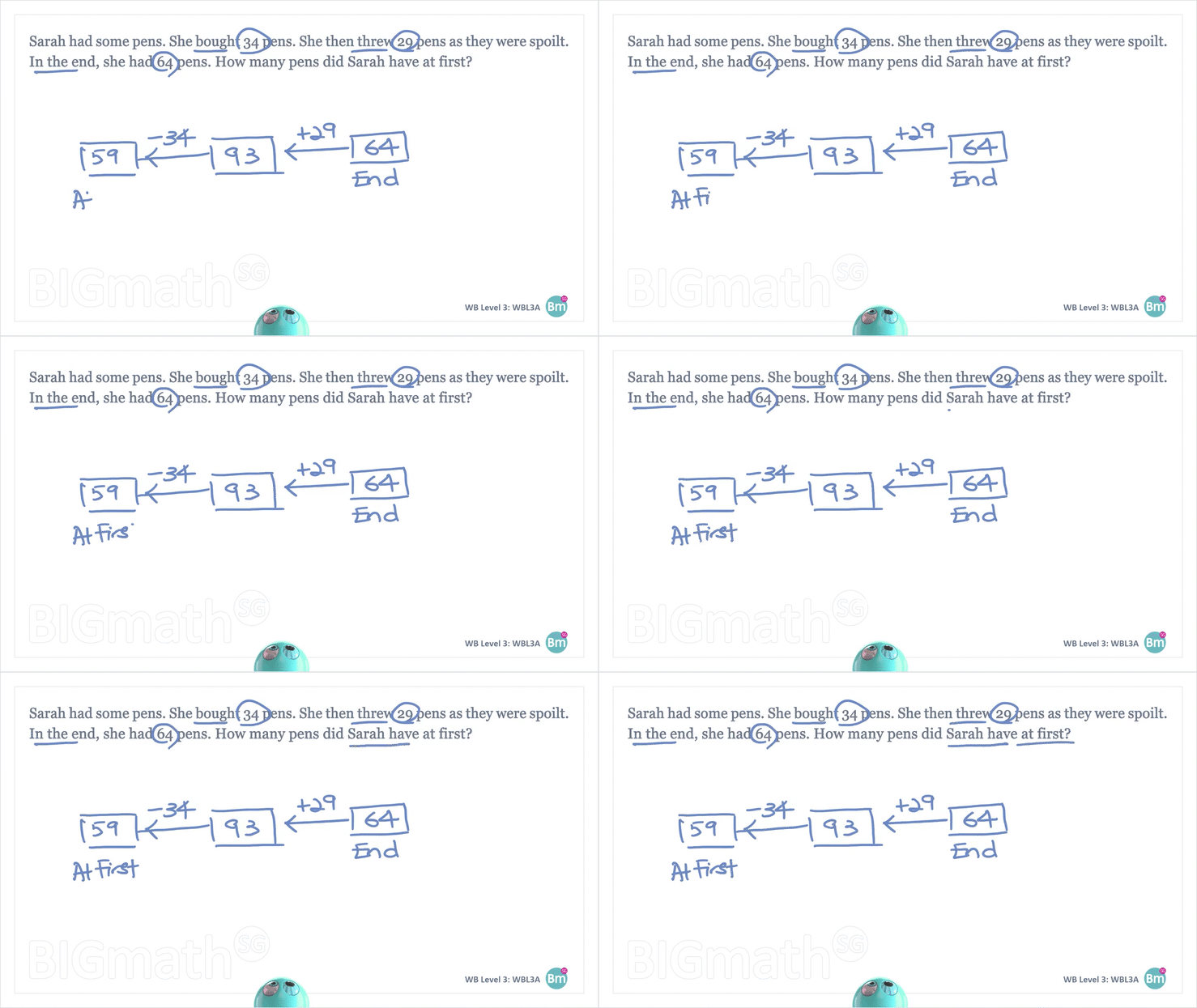
Sarah had some pens. She bought 34 pens. She then threw away 29 pens as they were spoilt. In the end, she had 64 pens. How many pens did Sarah have at first?
Workings Explained
Always remember when we work backwards, everything will be reversed. Example the 2nd sentence – “She bought 34 pens”. We know when we buy things, we will have more. We need to add. However, when we work backwards, instead of adding, we need to subtract.
- We will start drawing the model from the end by drawing a box and label it “End”. Put the end amount “64” in the box.
- Draw arrow to point to the left, draw another box. On top of the arrow write “+29” as “Sarah threw away 29 pens”. Instead of subtract, we need to add. In the box, write “93” (64+29=93).
- Draw another arrow to point to the left, draw another box. On top of the arrow, write “-34” as Sarah bought 34 pens. Instead of adding, we need to subtract. In the box, write “59” (93-34=59). Label the box “At First” or “Before”.
Sarah had 59 pens at first.
Identify the Concept
We know this is a Working Backwards question as we were not told the number of pens Sarah had but were asked for the number of pens she had at first.
Workings Explained
Always remember when we work backwards, everything will be reversed. Example the 2nd sentence – “She bought 34 pens”. We know when we buy things, we will have more. We need to add. However, when we work backwards, instead of adding, we need to subtract.
- We will start drawing the model from the end by drawing a box and label it “End”. Put the end amount “64” in the box.
- Draw arrow to point to the left, draw another box. On top of the arrow write “+29” as “Sarah threw away 29 pens”. Instead of subtract, we need to add. In the box, write “93” (64+29=93).
- Draw another arrow to point to the left, draw another box. On top of the arrow, write “-34” as Sarah bought 34 pens. Instead of adding, we need to subtract. In the box, write “59” (93-34=59). Label the box “At First” or “Before”.
Sarah had 59 pens at first.